
Big Man Guns
Looking After an Airgun Through an Indian Summer
Heat and humidity are hard on springs, seals and bluing. A short routine keeps a gun shooting straight for years.
- Care
- Maintenance
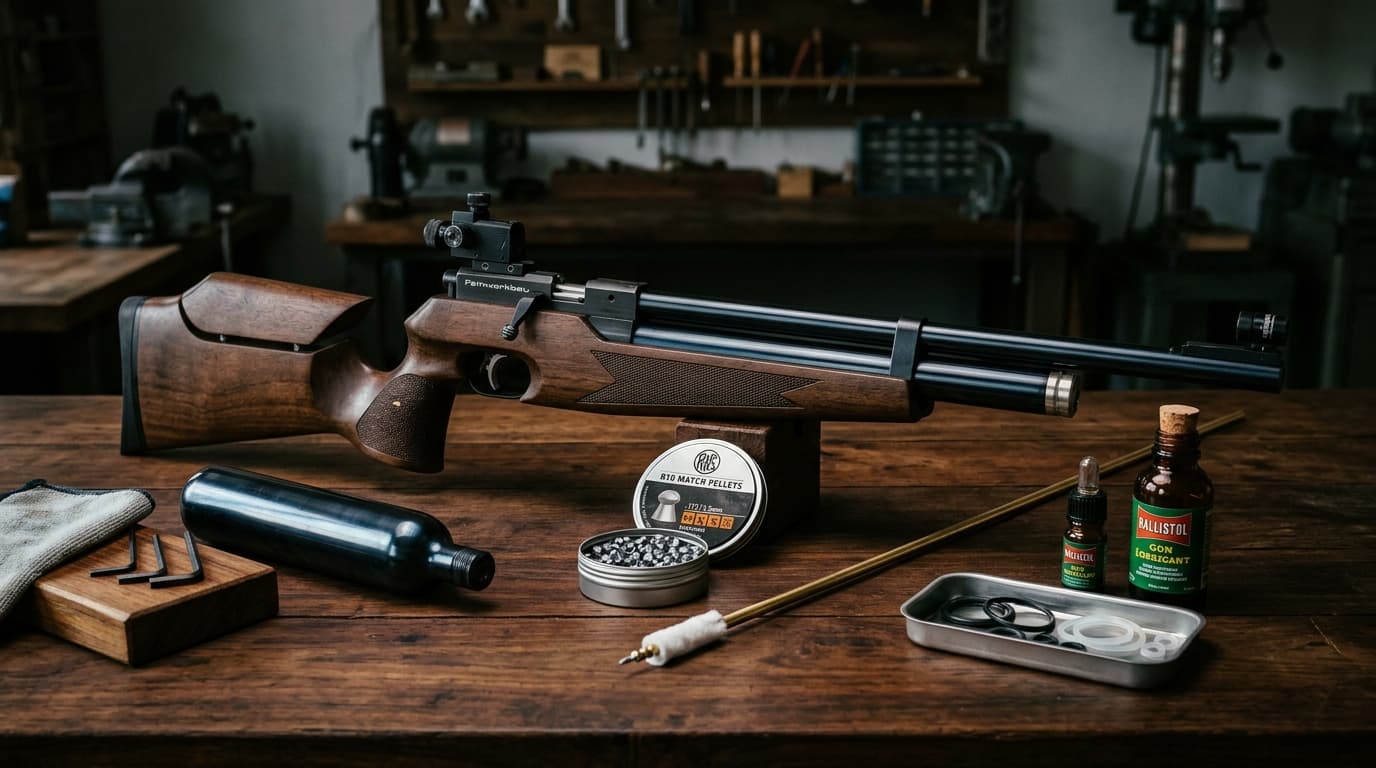
An airgun is a machine with rubber and leather inside it, and both of those dislike heat and damp. Most of what shortens a gun's life in India is not shooting it — it is storing it badly.
Where it should live
Somewhere dry, out of direct sun, and at a steady temperature. A locked cupboard inside the house is right. A car boot is not: a parked car in May reaches temperatures that will harden seals and soften lubricant, and the same car cools overnight into condensation.
The hard case you bought is for transport. Leaving a gun sealed in foam for months in a humid room holds moisture against the metal.
After a session
- Wipe the metal down before it goes away.
- Put a light film of the oil the maker recommends on the blued surfaces. A rag with a few drops on it, not a soaked one.
- Leave the action unloaded and, where the design allows, uncocked.
- Check pellets are stored dry — a tin of damp pellets will oxidise, and oxidised pellets shoot badly and foul the barrel.
Springs, seals and gas
Spring and gas-ram guns left cocked for long periods lose power. If your gun was cocked and put away, that is a habit worth breaking. For CO₂ guns, do not leave a capsule pierced in the gun for weeks; the seal takes a permanent set and you lose gas every time you fit a new one.
If accuracy drops before anything else does, the barrel needs cleaning. If power drops, suspect a seal.
The check before you store it
Breech clear, pellet out, safety on where there is one, wiped down, somewhere dry. Four seconds of work, and it is the difference between a gun that is still good in ten years and one that is not.